History | Recent issues | Objectives of the project | Timing of the project | The role of the EU | Gallery | Districts


Dear Visitor!

A capital with almost 2 million inhabitants in the 21st century cannot exist without a sewage system covering the whole city. In 2005 with the support of the European Union and the Hungarian Government a great sewerage project has begun. All of the participants of the project are working on the same goal: the current 92% coverage should reach near the 100% until the end of 2010.

On this homepage, everyone interested in or affected by the project, can always find up-to-date information about the progress of the work and the actual status of further plans.

History of the sewerage of Budapest:

During the Roman times a lot of aqueducts, bathes and sewage systems had been built in the area of Budapest. The drainage and the rainwater were disposed by the sewage system into the Danube. In the Middle Ages pipelines and sluice systems were the most widespread solutions. During the reign of King Mathias several pipeline systems had been established, however the drainage flew on the streets that caused permanent epidemic danger.

From the times before 1790 only a few sewage systems remained. After the Turkish Regime in the central parts of the cities subterranean sewage systems also appeared.

The tragic consequences of the Great Flood in 1838 also contributed to the decision that the sewage problems of Budapest must be solved once and for all. In the 1860's the sewage system on the right side of the Danube was 26.300 meters long, on the left side it was 54.000 meters, so in Budapest it added up to 80.300 meters.

In 1869, Sir Morton Peto, an English building contractor presented a proposal to the lord mayor of the city about building up the all-inclusive sewage system of Pest. The sewerage of the city was done in a combined system where the domestic and the industrial drainage were disposed in the same passage together with the rainwater. Also in London, Hamburg, Frankfurt, Berlin and Munich the sewerage was done by the same system. The first water-conduit of Pest was built in 1868 by the plans of an English engineer called William Lindley.

Based on the plans made by Lajos Lechner in 1876 the capacity of the main reservoir and the pump-yard was raised to 27 m3/sec. Thanks to this foresight the main reservoir system can supply the demands of the Pest side until now. The central pump-yard of the capital was built from 1889 until 1894. The main reservoirs belonging to the yard were finished in 1907 with a length of about 25 kilometres. The main reservoir and pump-yard of Óbuda were built between 1912 and 1917. The main reservoir at the Villányi road serving to dispose the water coming down from the hills was built from 1915 until 1917. The pump-yards in Kelenföld and Angyalföld were built after the 1st World War together with the sewerage of Kelenföld and the outside districts of Pest.

During the 2nd World War the sewage system was damaged in 153 locations in a length of altogether 3.360 meters. The reconstructions have began immediately after the war, and finished in 1947. The Budapest Székesfővárosi Csatornázási Művek (Budapest Capital Sewerage Works) was founded at the 1st April of 1946.

After the Millennium new sewage farms and reservoir systems were built which were able to make complete biological cleanings, too.

Recent issues:

In the environmental agreement concluded during the Hungarian EU-accession negotiations, the Hungarian Government undertook the obligation to solve the sewage disposal in every township belonging to the agglomeration with more than 15.000 inhabitants until the 31st December of 2010. On the 30th November of 2004 the General Meeting of the Capital accepted the decree which covenants that the investor of the finishing phase of the all-inclusive sewerage of Budapest has to be the Capital Government, and the Public Utilities Department of the Lord Mayor Office is responsible for handling the investor's tasks.

Objectives of the project:

The sewerage of Budapest is 92,6%. The intention is that the sewerage reaches 98% at minimum.

Timing of the project:

The finishing phase of the all-inclusive sewerage of Budapest can be divided into three parts.
2005 and 2006 were the period of the preparations.

During the second part, in 2006-2008 the establishing plans will be ready and authorized, and right after this the tender documents and plans will be completed.

From 2009 the execution plans will be also ready, and then the execution and the operation will start.

The role of the EU:

The Cohesion Fund finances the implementation of the project in a considerable part, the state support, and the municipal contribution is added to this. The circumferences it was useful jointly considering project elements by way of them (lifting, collecting mains, collectors) a contribution is paid in the proportion of the expected usage taken into account in the course of the planning.

The EU supports the come up of Hungary in the protection of the environment with complementary sources. For the completion of the expensive sewage systems the EU gives non-reimbursable subservience from the Cohesive Fund.

Gallery:

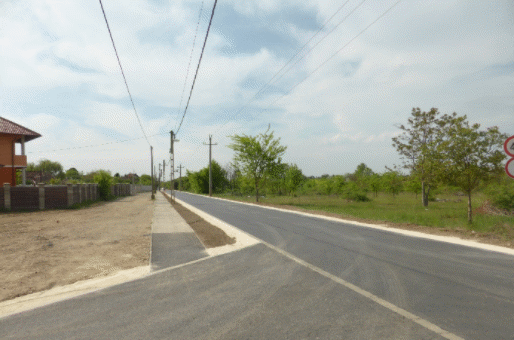
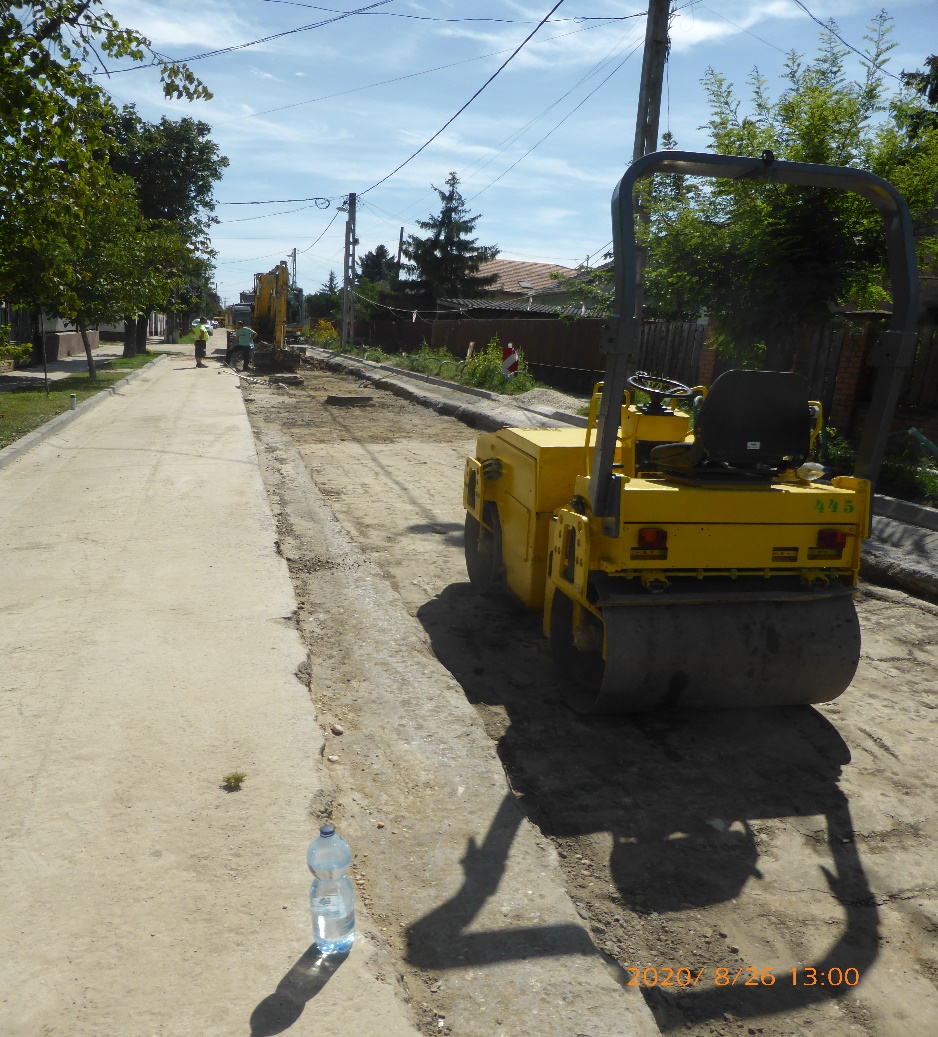
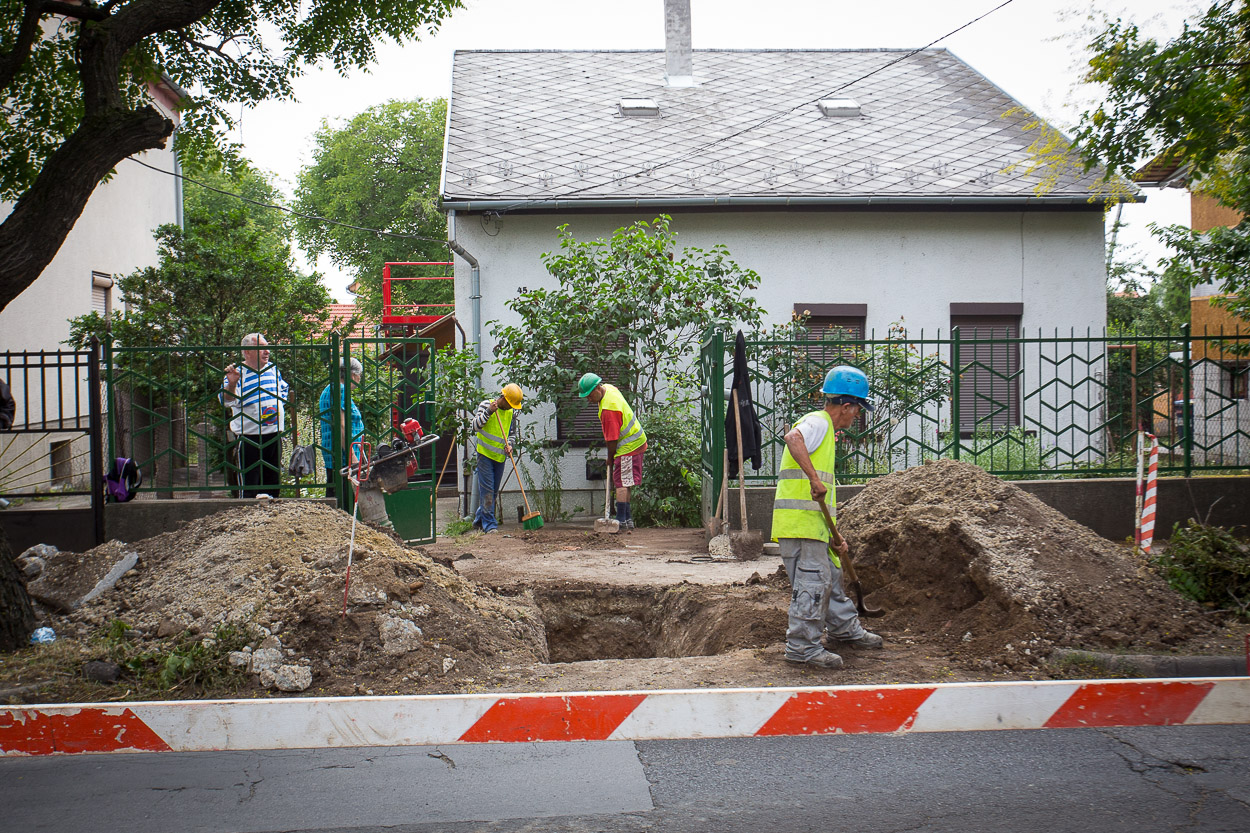
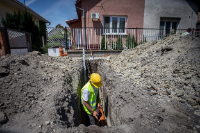
The all-inclusive sewerage of Budapest is permanently in progress until 2010. You can find the visual documentation of the project's main stages and elements »here«.

Districts:

The most important information and news of the districts can be found »here«, ordered by districts.